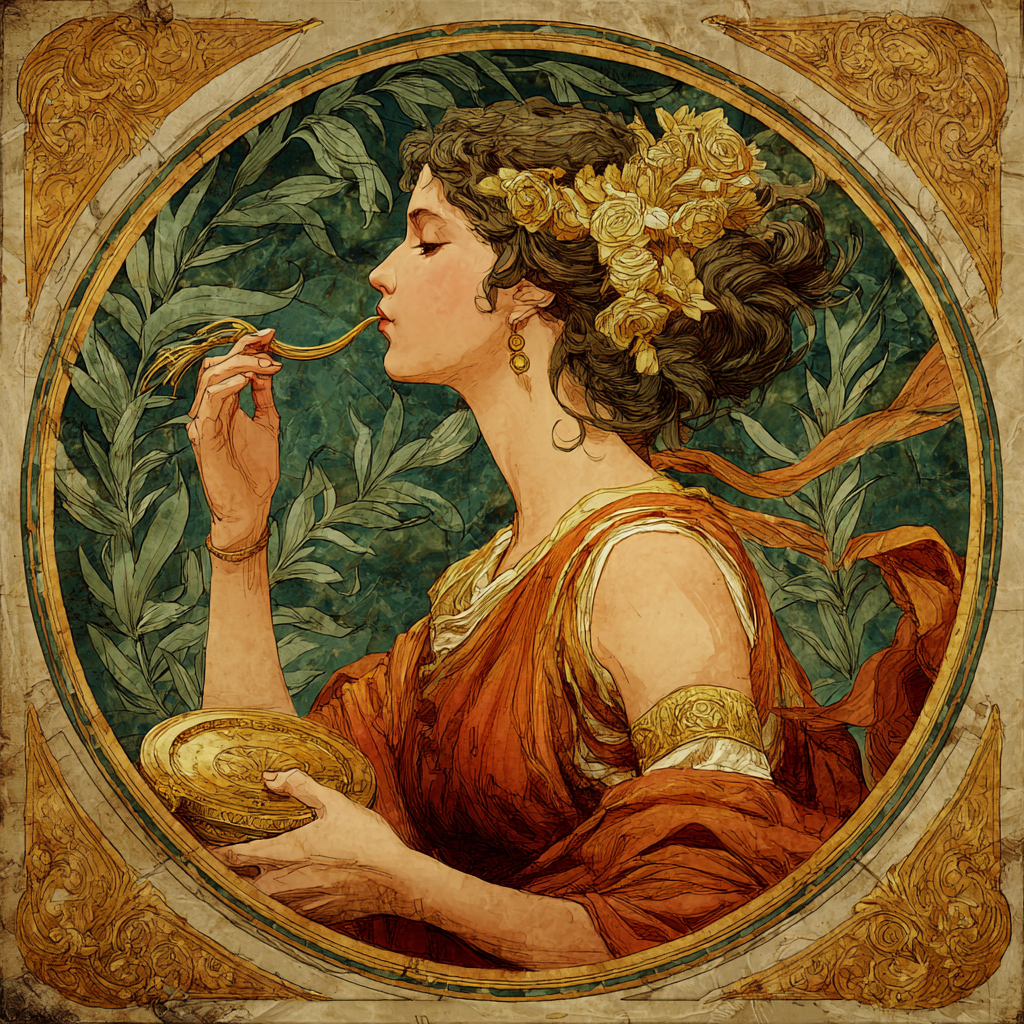
Titaness of memory, mother of the Muses. Her spring restores what Lethe makes you forget.
Named after Mnemosyne — the Greek Titaness of memory, mother of the nine Muses. In antiquity, pilgrims at the Oracle of Trophonius would drink from the spring of Mnemosyne to remember what they had been shown. Her opposite is Lethe, the river of forgetfulness. That is the job here: combat the Lethe of an unread corpus.
How it works
Drop a PDF into a workspace's inbox folder. A watcher picks it up, routes it to the right parser for the document, verifies each page, rescues anything that fails with a vision model, and files the result into the workspace's own index.
←↓Click a numeral to see the sceneTap a step to see the scene
sceneclick a step to begin
←
Click a numbered step to walk through what happens to your paper.
Connecting to it
Mnemo is designed as an MCP server. Point any MCP-capable client at it — Claude Desktop, a self-hosted LibreChat, or claude.ai from the web — and the same workspaces and search tools are there wherever you ask.
MCP tools
list_workspaces() — see what's indexed
create_workspace(name) — make a new one
search_literature(query, workspace) — full synthesis with citations
raw_context(query, workspace) — raw retrieval, no synthesis
Notable design notes
Workspaces are first-class. Each has its own index, no cross-talk. A search in the dissertation workspace only sees dissertation papers.
Provenance per page. Every parsed document records which parser handled which page and whether the vision fallback fired. A citation can be traced back through the extraction pipeline if a quote looks off.
Auth at the edge. Authentication sits in front of the server so the corpus stays private even when the endpoint is reachable from anywhere.
Mnemosyne and Atlas were both Titans. This is the ingest-and-remember half of the stack; atlas is the visualize-and-navigate half. Same data, different lens.